Crossy Road Tips: Read the Lanes, Hold the Beat, Keep the Run Alive
A practical Crossy Road guide to reading traffic lanes, timing your hops, and deciding when a coin is worth the risk.

Most Crossy Road runs end on a hop you already knew was bad. You saw the truck. You went anyway. Then the score screen says 37, and your thumb is already on restart before you've worked out what happened.
This guide is about the two things that actually move your score: how you read a lane before you enter it, and how you pace the hops in between. Coins and characters come later, because collecting is the part most players get backwards. You'll finish with a lane routine, a rhythm you can hold for a long run, and a rule for when a coin is worth the risk.
One note before we start. Crossy Road is Hipster Whale's game, first released in 2014. We don't work with the studio and they haven't endorsed this guide. Everything below comes from playing it.
What a Crossy Road Run Actually Rewards
Strip out the mascots and the run is a very short list of numbers.
One hop forward is one point, and that's the whole score formula. Water rows, rail rows, road rows, grass: the game doesn't care what you crossed, only that you moved up. Coins are a separate currency, and they never add to the number in the corner. Mixing those two up is the first mistake, and it's an expensive one.
Death is binary. A car, a train, deep water, or the eagle, and the run is gone. No health bar, no recovery, no clever save. That's why a steady player who reaches 400 rows beats a twitchy one who restarts every 30 seconds, even when the twitchy player looks far busier.
Characters are cosmetic. BlueStacks' beginner guide says it directly: they don't affect gameplay mechanics. A mascot changes the sprite and sometimes the background theme, and that's the whole difference. It doesn't change your hop speed, your hitbox, or the traffic. The Vulcan Post guide makes the same point, noting that every character moves at the same speed and is just as easy to kill.
Reading Crossy Road Lanes: What to Check Before You Hop
Lane reading is a habit, not a talent. Do the checks in the same order every time and it gets fast.
Start with the row above the one you're entering. That sounds backwards, and it's the single biggest fix most players can make. A lane can look clear for a full second while the lane beyond is a wall of traffic. Read only the near lane and you hop into a gap that closes behind you, leaving you stranded in the middle of a road.
Wrong order.
Why does the row above matter more than the row you're in? Because that's where you'll be standing one hop from now, and the middle of a road is the most dangerous square on the board.
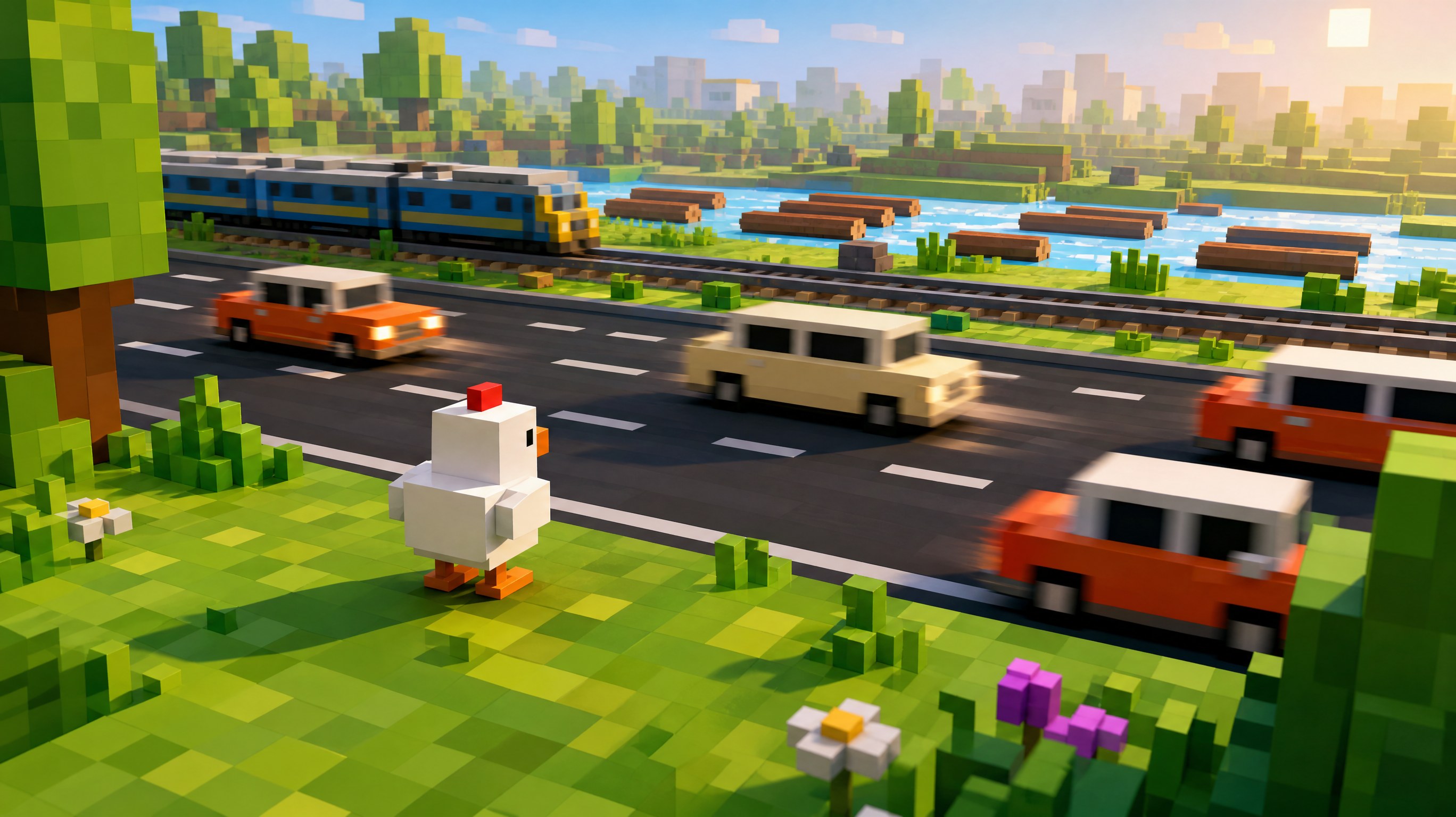
Then judge direction and speed, not the current gap. Traffic runs one way per lane, and the gap you can see now will be somewhere else by the time you land. The safest hop is usually into the space a vehicle has just left, because that lane won't produce another car for a beat. Chasing the gap ahead of an oncoming truck is how you get clipped. Trucks make this worse: they're longer than cars, so the space behind them closes faster than it looks.
Rail rows are binary. Empty or dead. Trains come from both directions on the paired tracks, and you see them enter at the edge of the screen a moment before they arrive. Wait on the grass until both tracks are clear at once, then cross them in a single push rather than stopping on the narrow strip between them, which offers no escape in either direction.
Water is the only place where the floor moves. Land near the middle of a log rather than the edge, so drift doesn't slide you off while you line up the next hop, and you still have room to pick a landing spot on the far side. And never ride a log toward the bottom of the screen to buy thinking time. The log will take you out of bounds, and that ends the run just as cleanly as a car does.
Crossy Road Hop Rhythm: Why the Pause Is a Move
Fast tapping feels productive. It isn't. The players who post big numbers move in a rhythm: hop, land, read, hop. Land, read. The pause is part of the move, not a break from it.
Pause where pausing is free. Grass rows, the near shoulder of a road, the middle of a long log. Those spots cost you nothing but a fraction of a second. Never pause inside a traffic lane, even when the gap looks generous, because every gap has a timer you can't see.
The eagle enforces this. Stand still too long and it takes you. Hop backwards more than a couple of rows and it comes early, which matters when you're trying to unwind a bad position. You'll find three seconds and five seconds quoted for the idle timer in different guides. I've never seen an official number, and the two don't reconcile, so treat it as "a couple of seconds" and don't build a plan around the exact figure.
Here's the pattern that pays off most. A road has a fast near lane and a slow far lane. Most players cross the near lane the moment it clears, then stand in the middle hoping the far lane opens. Better to wait on the shoulder until the near gap and the far gap line up, then take both lanes in one push. It feels slow. Do it anyway. You lose a beat and keep the run.
Routing a High Score Run in Crossy Road
High scores come from straight lines.
Every sideways hop costs you a beat, drops you into a lane you haven't read, and pulls you away from the column you already know is safe. Move up in a column whenever the board lets you, and only step sideways when the column ahead is genuinely blocked. When you do move laterally, move one tile, not three.
Cross a whole road in one push. Two lanes or four, the plan is the same: read the far lane first, find the moment both are clear, then commit. The players who die at 200 rows are usually the ones who treated the middle of a road as a rest stop, then found out the far lane was never going to open for them.
Rivers are the reset. Water slows everything down, and that's a gift. Use the log ride to scan the next three rows instead of staring at the log under your feet. By the time you reach the bank you should already know which lane you're entering.
And take the safe row over the fast row. In Crossy Road, the boring row is usually the right one. Score comes from surviving, not from speed, and two hundred careful rows beat sixty brilliant ones every time. Keep your thumb hovering above the glass instead of resting on it. Small thing. It cuts accidental taps more than you'd expect.
Crossy Road Characters: What 100 Coins Really Buys
The prize machine charges 100 coins a spin and hands you a random character. The store listing promises over 300 characters and more than 28 worlds to discover, so the collection is a long project by design.
None of it makes you better at the game. Since characters are cosmetic, a full roster and an empty one play identically. What you're buying is variety: a new silhouette, sometimes a new backdrop, a reason to keep opening the app. That's a fine reason, and it's still not a scoring strategy.
Which brings us to the coin question. Coins show up on rows you're already crossing, and you can also earn them from optional ads and the free gift. The rule I use: take the coin if it's on your path, skip it if it needs a detour. A coin is one hundredth of a spin. Your run is worth more than that, and the detour into a live lane is where most "why did I do that" deaths come from. Collecting is a slow burn, and that's fine, as long as the pull of one coin doesn't drag you into traffic you'd never otherwise touch.
If you're chasing a personal best, ignore coins for the whole run. If you're collecting, do a separate coin run where the score doesn't matter and you allow yourself the risky pickups. Mixing the two goals is why people die at 80 rows with 40 coins in the bank.
A 15-Minute Practice Session for Cleaner Crossy Road Runs
Four short runs, each built around one of these Crossy Road tips. Do them in order.
- Warm-up. No coins, no sideways hops unless the column is blocked. Just rows.
- Pause drill. On every grass row, stop for one beat and read the next two rows before you hop. Say "read" in your head if it helps.
- Water drill. On every river, land mid-log and name the next log out loud before you jump.
- Score run. All three habits together, coins ignored.
Does that sound slow? It's slow for the first ten minutes, until waiting stops feeling like waiting and starts feeling like a free look at the next three rows. Fifteen minutes is enough for the habit to settle, and that one habit tends to add more rows than any twitch upgrade.
Building Your Own Crossing Game on Binkbink
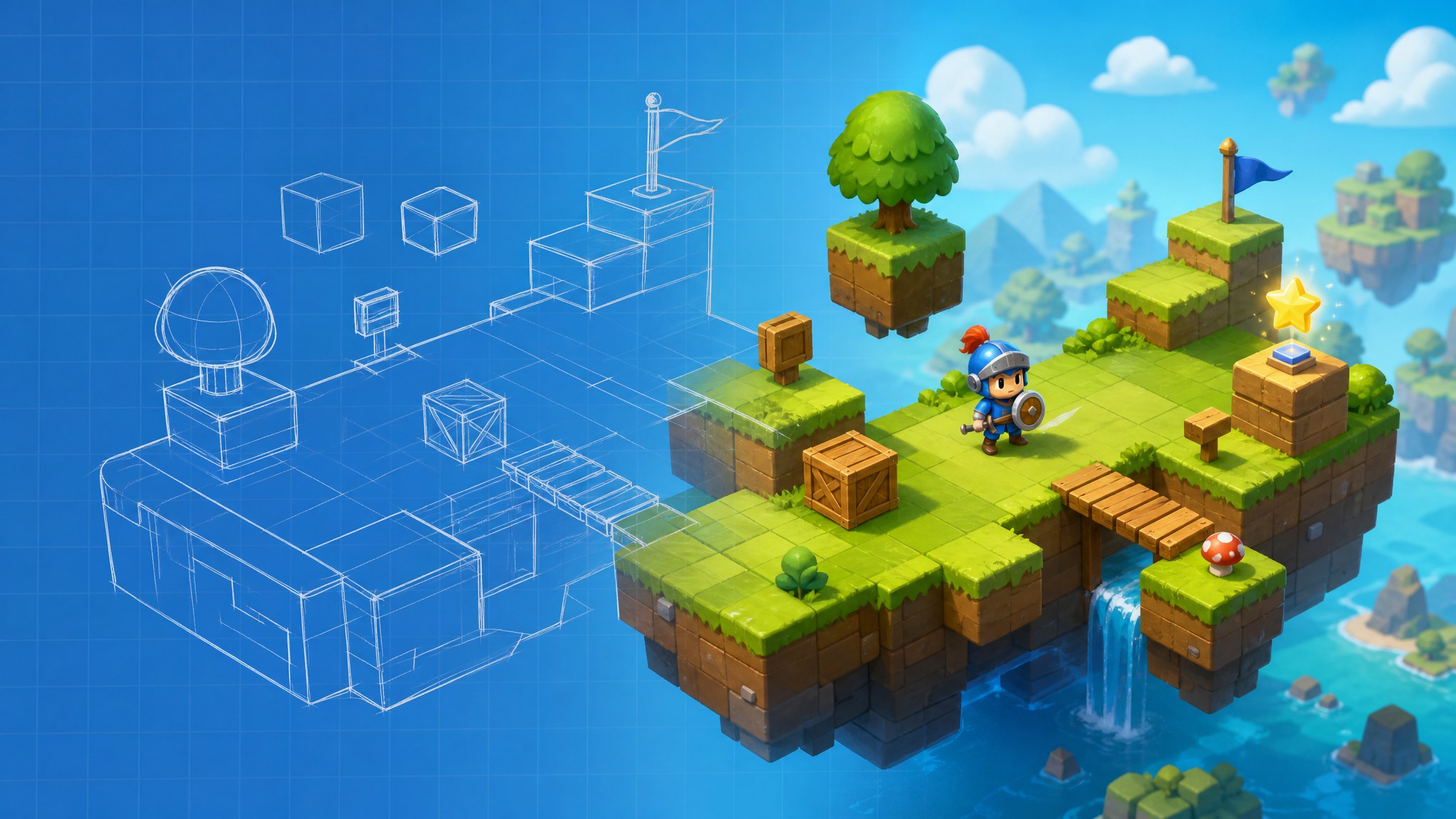
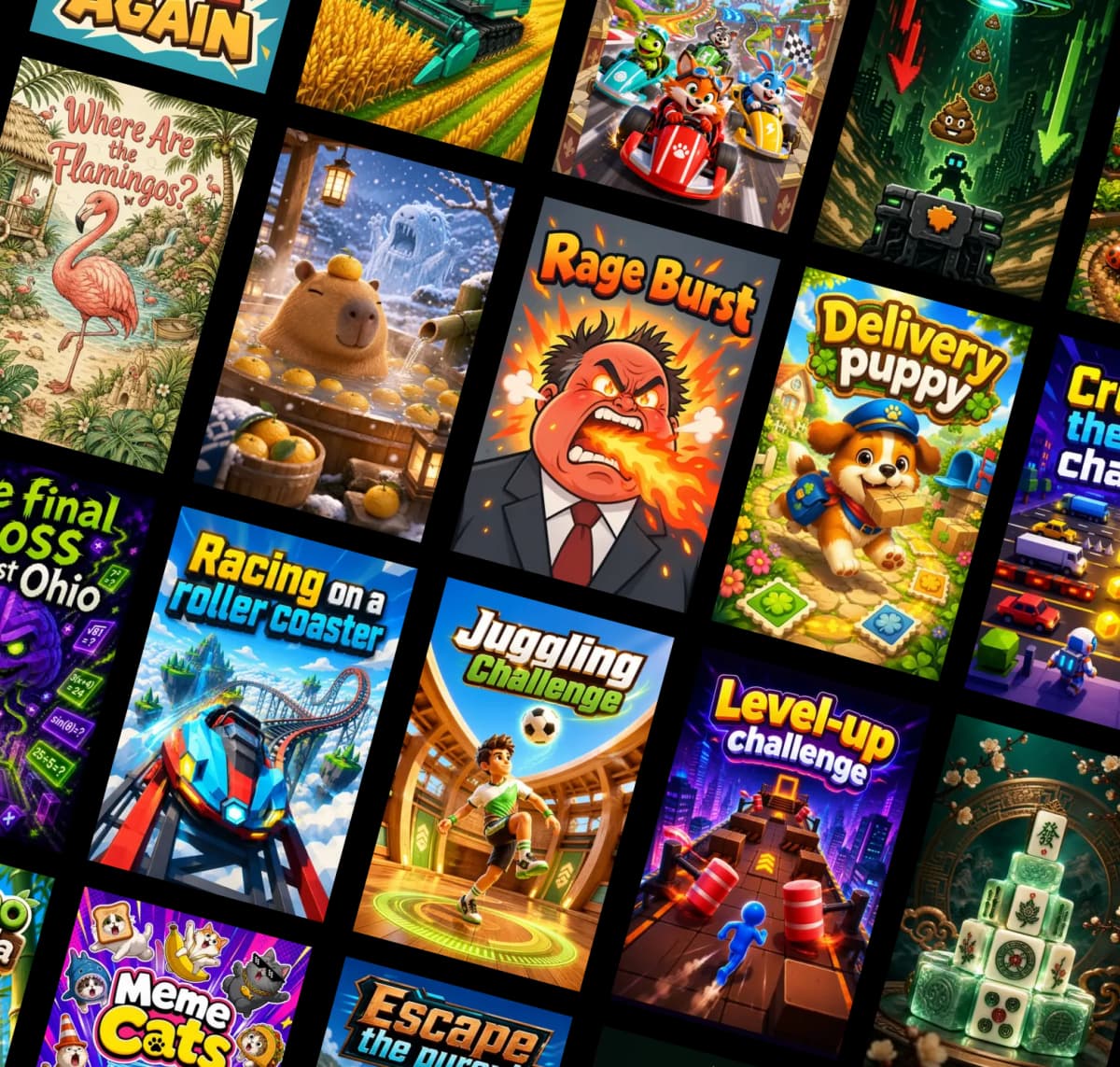
If the rhythm is what you like, you can build a version of it. We make Binkbink, an AI game maker that turns a written description into a playable game, and a lane-crossing prototype is well within reach.
- Open the Binkbink app or binkbink.ai and start a new game from the create screen.
- Paste a prompt like this: "A blocky lane-crossing game where a chicken hops forward one tile at a time across roads, train tracks, and rivers. Score goes up one point per row. A hawk takes the chicken if it stops moving for a few seconds. Coins appear on safe rows and buy random cosmetic characters."
- Play it, then ask for changes one at a time: traffic speed per lane, log drift speed, how far ahead the camera shows.
What you get is a simplified prototype, not a copy. The art, the mascots, and the exact traffic timing belong to Hipster Whale, and we're not affiliated with them. The part worth borrowing is the pacing: one clear read, one committed hop, repeat. Build that loop first, then argue about how fast the trucks should be.
That's the whole game, really. Read the row above, wait for the gap to line up, cross in one push, and use grass for thinking. Next run, try the pause drill and nothing else. The score will tell you whether it worked.