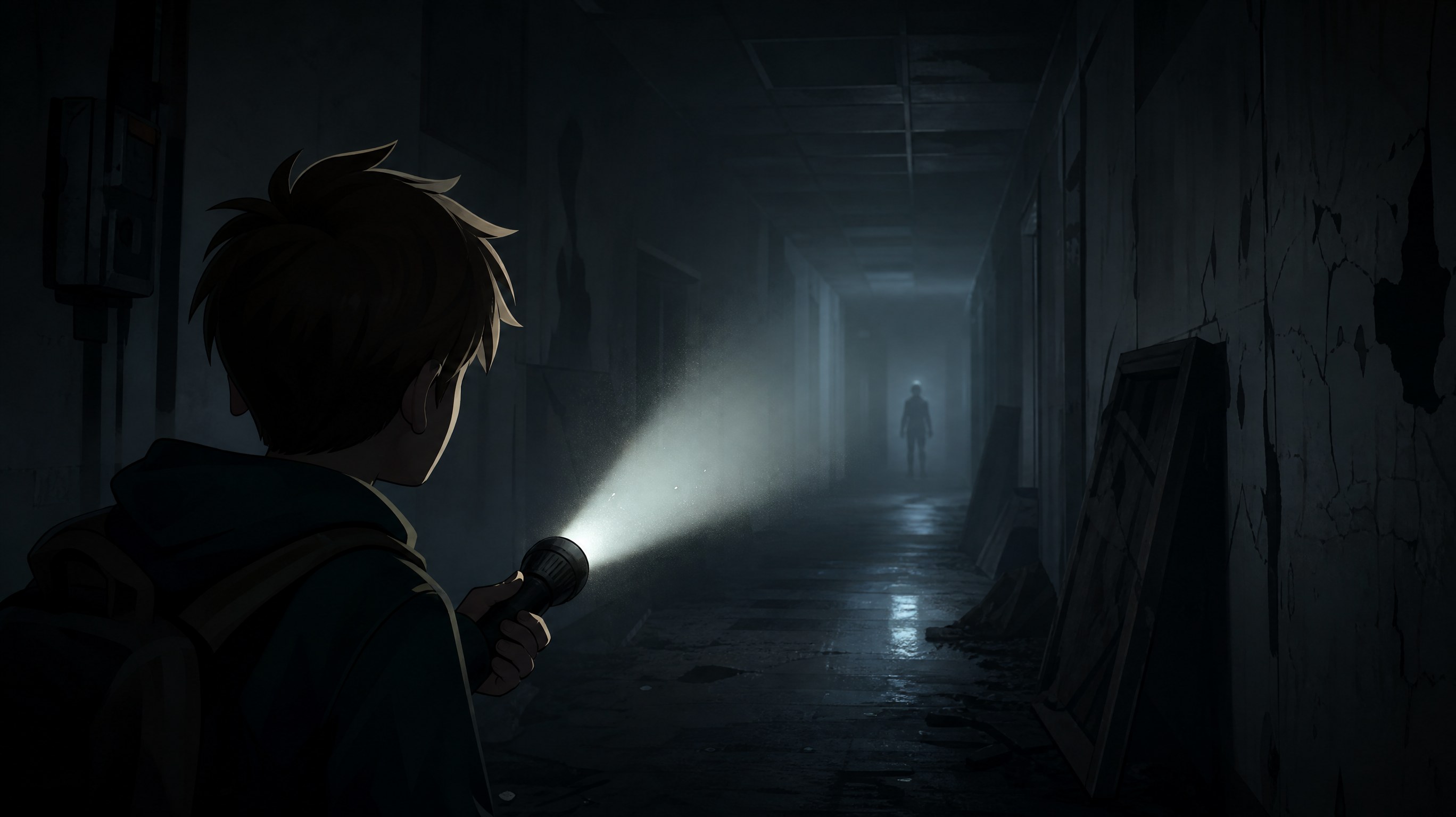
Games Like Five Nights at Freddy's, Sorted by What Scares You
Nine games like Five Nights at Freddy's, sorted into camera-watch survival, chase-and-run, and psychological horror, plus what each one borrows and drops.

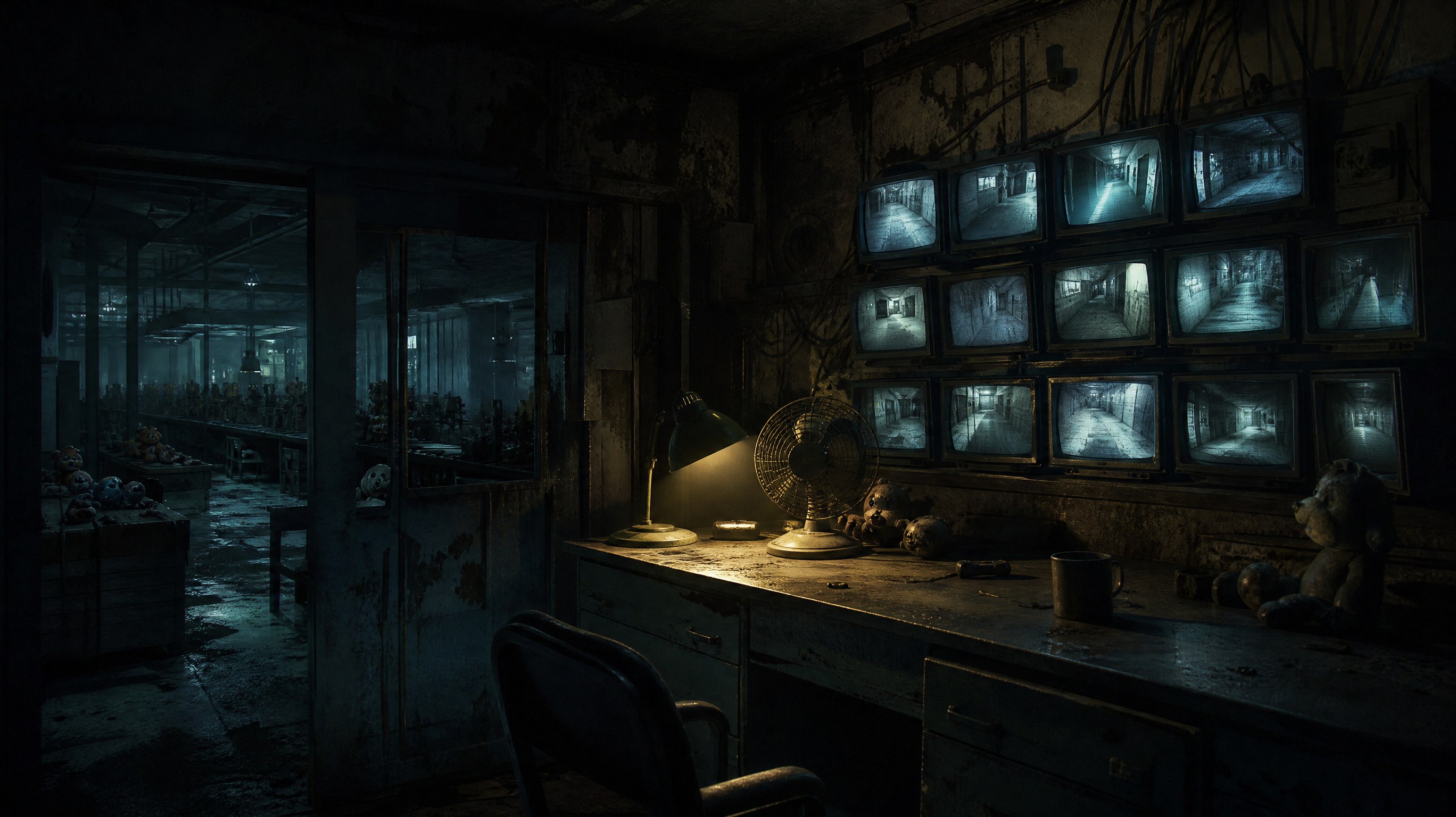
Five Nights at Freddy's turned a security desk into a horror engine: a wall of camera feeds, two doors, one power meter, and a shift that ends at 6 AM. Nothing in that room can fight back, and that's the whole design.
Twelve years after Cawthon's 2014 release, the series has mostly left the room behind: Security Breach handed you a mall to roam, and Secret of the Mimic, out in June 2025, dropped you into an abandoned costume workshop. Neither scratches the itch that made the first game a phenomenon.
So the search means three things. Some want the chair and the monitors. Some want the thing at the end of the hall to start running. Some want the dread without the jump scare, so the nine games below are grouped that way. None of them are affiliated with Scott Cawthon or Steel Wool.
Nine Games Like Five Nights at Freddy's at a Glance
Game | Style | Keeps from FNAF | Drops | Best for |
|---|---|---|---|---|
Observation | Camera-watch | You are the cameras | Power meter, mascots | Sci-fi desk job |
Iron Lung | Camera-watch | Confined seat, panel | Live feeds, stalking monster | One hour, alone |
Amanda the Adventurer | Camera-watch | A screen you can't trust | Shift timer, doors | Puzzle players |
Outlast | Chase-and-run | No weapons, rationed light | The desk | Long nights |
Dark Deception | Chase-and-run | Mascot-shaped killers | Sitting still | Quick sessions |
Poppy Playtime | Chase-and-run | Mascot horror, notes | Fixed camera, the clock | Mascot lore |
Amnesia: The Dark Descent | Psychological horror | Resource rationing, hiding | Cameras, the clock | Slow fear |
Layers of Fear | Psychological horror | Shifting rooms | Any real pursuer | Mood over danger |
Visage | Psychological horror | Light as currency | Hand-holding | Patience |
What Five Nights at Freddy's Actually Does
The original runs on accounting: every camera check costs attention you could have spent on the door, and every door costs power you'll want back at 4 AM. The animatronics can't chase you. They arrive, and the only thing between you and them is a button you can hold for a few seconds before the meter drops.
You never watch them move. A feed cuts to static, then comes back with the stage empty. That gap is where the fear lives, and it's cheaper to build than any monster.
Most successors copied the mascots and the scream. Few copied the bookkeeping, which is why so many games like Five Nights at Freddy's feel like a costume with nobody inside.
Camera-Watch Survival: Stay in the Chair
Observation (2019, No Code) comes closest to that setup. You play SAM, the AI running a space station, and your body is the interface: cameras, hatches, power routing, a drone you can steer outside the hull. When astronaut Emma Fisher gets in trouble, you can't run to her. The camera stays a tool rather than a cutscene, and with the clock gone the pressure comes from puzzles that Polygon's review found genuinely aggravating.
Iron Lung (2022, David Szymanski) strips the idea to its bones: a submarine crossing an ocean of blood on an alien moon, one camera that takes still photos, and no view except the pictures it prints. It runs about an hour, most of it spent navigating by photos and keeping the reactor alive. The seat and the panel survive. The live feed and the stalking AI don't, because nothing ever walks to your door.
Amanda the Adventurer (2023, MANGLEDmaw Games, published by DreadXP) swaps cameras for a VCR. You inherit a house and a stack of unlabeled children's tapes. Amanda talks to you through the screen, and if you rewind or pause, you'll find frames that were never in the broadcast. It keeps the screen you can't stop watching even after the thing talks back. The shift is gone: no timer, no doors, just a threat that travels through tape. Two sequels followed, in 2024 and 2025.
Chase-and-Run: Games Like Five Nights at Freddy's With Legs
Outlast (2013, Red Barrels) is the obvious next step for anyone who wanted to leave the desk. A journalist, an asylum, a camcorder, no weapons. Night vision runs on batteries that only drain while the lens is on, so every dark corridor is a small wager. The structural inheritance is no fighting and one resource you burn to see, while everything else turns into a sprint-and-hide game that leans on gore.
Nothing like the original.
Dark Deception (2018, Glowstick Entertainment) takes the arcade route. Episodic mazes, glowing shards to collect, monsters that hunt the moment you move. Chapter one throws animatronic monkeys at you like a joke about where mascot horror went after 2014. Two things survive: creature design from kids' entertainment, and the rule that you can't win a fight. Stillness doesn't. The loop is Pac-Man with teeth, best in twenty-minute sessions.
Poppy Playtime (Mob Entertainment) is the most visible mascot horror series to grow in the FNAF shadow. A toy factory, a GrabPack, and notes about what happened to the staff. Chapter 5, subtitled Broken Things, launched on PC in February 2026 and reached consoles that May. Tone and structure carry over: cute mascots with wrong proportions, lore in fragments, chases ending in a slamming door. The desk doesn't carry over. You're always moving, and always a chapter away from the next release.
Psychological Horror: Five Nights at Freddy's Without the Jumpscare
Amnesia: The Dark Descent (2010, Frictional Games) is the ancestor of the no-weapons rule that FNAF later simplified. A lamp with oil, a sanity meter that punishes darkness and monster sightings, and nothing in your hands that can hurt the thing in the cellar. Oil and sanity both drain and both refill by taking risks, which is the double ration it shares with Five Nights at Freddy's. Cameras and clock are gone, and the 2010 physics show their age. Still the best argument that helplessness scales up.
Layers of Fear (2016, Bloober Team) has no pursuer at all, which makes it an odd entry here. The house rearranges behind you, corridors end in walls, and that trick is the same one FNAF pulls with a camera cut, stretched across an entire game. A 2023 remake rebuilt both Layers games in Unreal Engine 5.
Visage (2020, SadSquare Studio) is the least forgiving pick. Matches are your only light source, chapters open in any order, and the game rarely tells you what it wants. I bounced off it twice before it clicked. It keeps the resource anxiety and drops the mascot, clock, and hand-holding.
Making Your Own Camera-Watch Horror Game
We build Binkbink for lightweight games, so a full 3D clone isn't on the table. A camera-watch survival game is mostly bookkeeping and timing, which is exactly the kind of rule set a paragraph of plain text can describe.
A night-shift horror game set in a small security office. The player watches four rooms through grainy camera feeds and can close one door at a time. Every camera check and every door use drains a shared power meter. A creature moves between rooms when it isn't being watched. The shift ends at 6 AM. If power hits zero before then, the creature reaches the office.
Three rooms and a meter teach more about tension than a monster model. Build it, play it, then cut the night shorter until the last minute hurts.
Which One Should You Start With
For the exact feeling of the original, start with Observation. Iron Lung is the shortest commitment.
Want to be chased? Dark Deception fits a coffee break, Outlast fills an evening. If jump scares are why you quit Five Nights at Freddy's, go to Amnesia or Visage. Neither relies on a face filling the screen.
For mascot nostalgia, Poppy Playtime is the safe bet, starting with Chapter 1.
FAQ
Is Secret of the Mimic like the original Five Nights at Freddy's? No. It's free-roam, with puzzles instead of a camera shift. The VR recreations of the early nights in Help Wanted get closer to it.
Can you make a game like Five Nights at Freddy's with AI? The loop, yes, at a smaller scale: rooms, a timer, a power meter, one creature with simple rules. What you won't get is a cast of animated 3D characters with hand-tuned timing, which is the part those studios spend years on. Our tool is honest about that line.
The original still works because it made restriction feel like a mechanic instead of a limitation, and that's the part every game on this list is chasing. Pick the restriction you want to live inside for a few hours, and the right one becomes obvious.