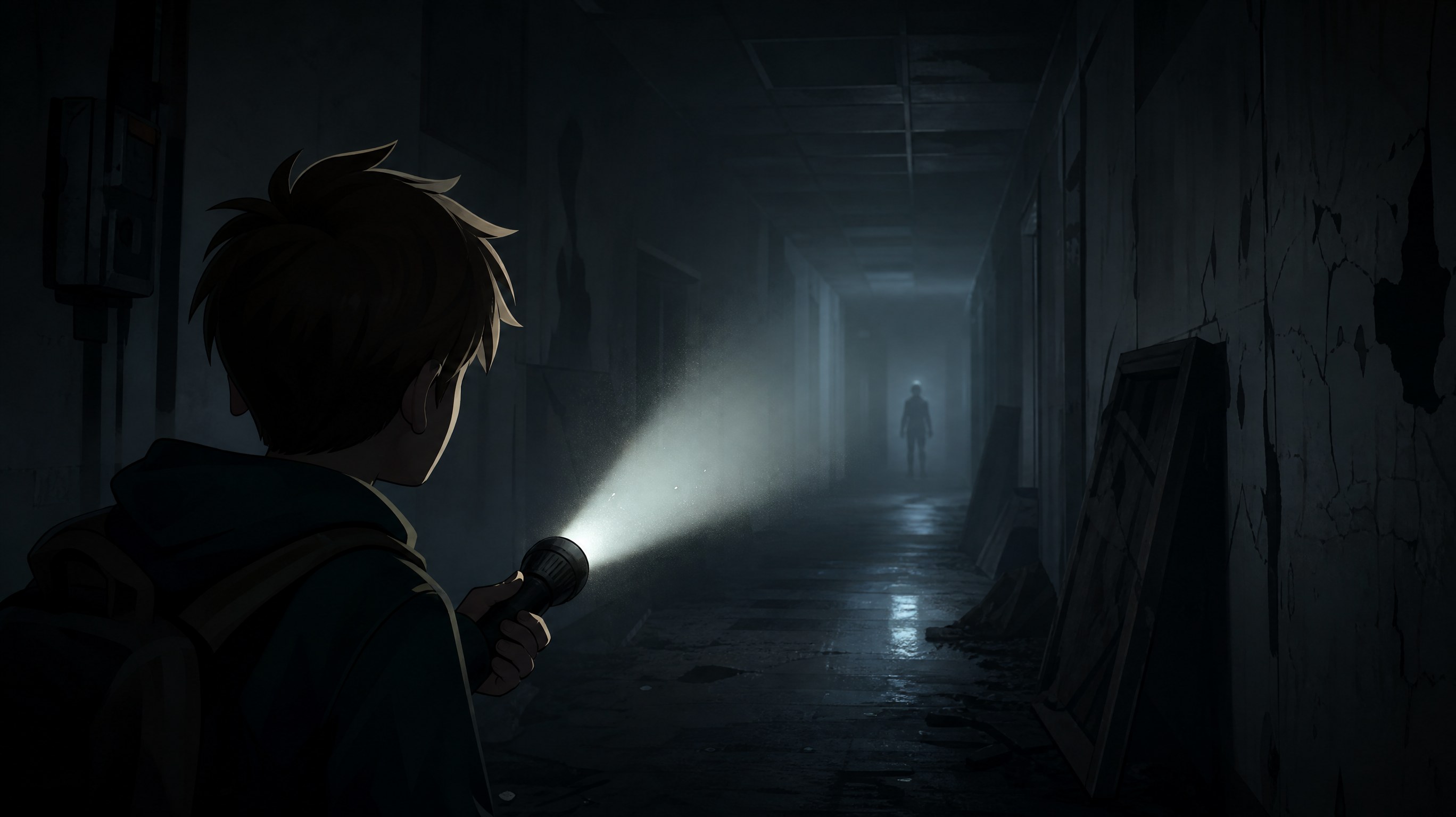
How Horror Games Online Split the Fear Between Players
A practical guide to horror games online. Phasmophobia, Lethal Company, The Outlast Trials and Dead by Daylight, sorted by who carries the fear.

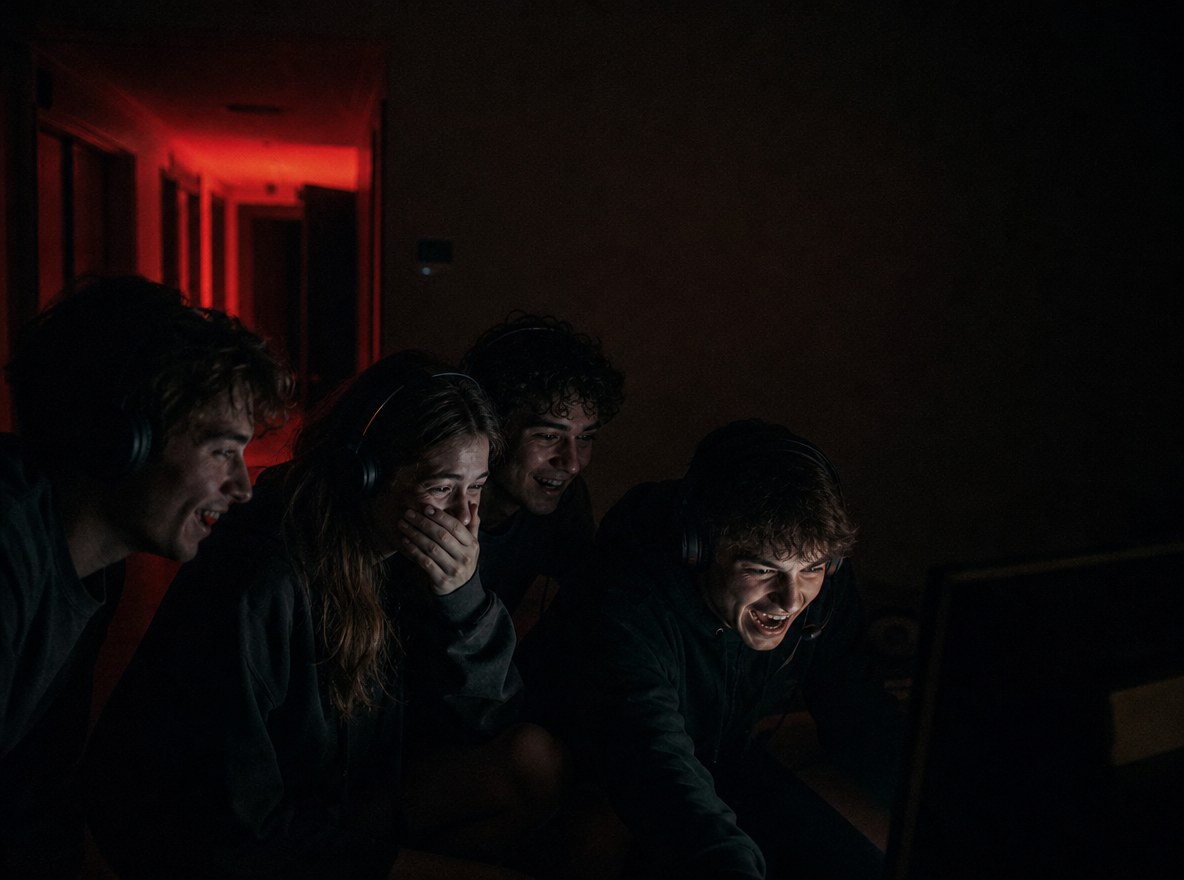
Scare ratings tell you almost nothing about horror games online. Two groups can open the same title on the same evening and come away with completely different nights, because the monster isn't what decides the mood. What decides it: where the fear sits, and who ends up carrying it.
That sounds abstract until a lobby falls apart at one in the morning. In some games the fear is spread thin, with each player holding one reading the others need. In others it's handed to a single person who spends the whole match being the threat. A few simply frighten everyone in the room at the same second, which is a different kind of evening altogether. Where the fear lands decides how your group talks, who gets blamed when a run goes wrong, and whether you log off laughing or in silence.
Four games cover most of that range. Phasmophobia, Lethal Company, The Outlast Trials and Dead by Daylight each put the fear somewhere different, and each asks something different of the people you play with.
Phasmophobia splits the fear by evidence, and that's rare among horror games online
Kinetic Games built its ghost hunt on a gap that never closes: no investigator can identify a ghost alone. The game arrived in early access on Windows in September 2020 and now runs on PC, PS5, PSVR2 and Xbox Series X|S, one to four players per contract.
Every tool returns a fragment. An EMF reading spikes in a hallway, a spirit box answers a question nobody asked properly, a colleague sees a shape through the projector and can't describe it well enough to be useful. The group has to reconcile those fragments into a ghost type before the timer runs out, and reconciliation is where the fear lives.
Two people can stand in the same room and disagree completely. Neither of them is lying. That argument takes long enough for the hunt to begin.
Sitting in the van does more for tension than any jump scare in the game. Whoever watches the monitors sees the ghost cross rooms that the people inside can't hear it leave, and there's never enough time to warn them properly.
It's also the most forgiving fear on this list, which cuts both ways. A group with a hundred hours stops being scared and starts running contracts like a checklist. Talking is always allowed here, and nothing punishes you for it.
Where Phasmophobia and Lethal Company disagree about information
Both games pull players apart and force them to report back over a radio. The resemblance ends there, and the difference explains why one feels like an argument and the other feels like abandonment.
Phasmophobia's split is horizontal and optional. Any investigator can carry any tool, so the division of labour changes with every contract and nobody owns a role for long. Information is recoverable in conversation. Ask, and somebody answers.
Lethal Company's split is vertical and fixed for the length of a run. One player sits at the terminal with the map, the timer and the creature positions, while the other three walk into a building with no idea what's behind the next door. The person holding the most information is the one who can help least, which is a crueller arrangement than it sounds.
So the choice comes down to your group's favourite kind of helplessness. If you enjoy arguing over evidence, Phasmophobia supplies evidence worth arguing about. If you enjoy hearing a friend describe your death in real time, Lethal Company does that and sends you the bill.
How Lethal Company makes horror games online feel like a shift with a quota
Zeekerss released this one into early access on Steam in October 2023, and it has stayed a Windows-only, four-player affair. The frame is employment. A crew lands on a moon, hauls scrap back to the ship, sells it, and has to clear a rising quota before the deadline.
Monsters aren't the pressure. They're the enforcement. The pressure is a number that climbs every few days, plus gear that costs more than the group can comfortably afford.
Debt is where the social fear comes from. Everyone shares a wallet, so a bad purchase is a bill the whole team pays, and a panicked exit leaves somebody's loot on the floor. The post-mortem happens on the walk back, usually with three people still breathing and one person unusually quiet.
Oddly, the most frightening job is the terminal, and it's the one nobody volunteers for after a week. You watch a colleague walk into a room you can see is occupied, and the radio won't carry a sentence fast enough to stop them.
It's the only game here where losing comes with a receipt.
The Outlast Trials suits groups who want a campaign, not a haunting
Not every group wants to invent its own dread, which is where this one fits. Red Barrels put it into early access on Windows in May 2023 and shipped version 1.0 in March 2024 alongside PS4, PS5, Xbox One and Xbox Series X|S. Four players, one set of trials, a hub between them.
Fear here is authored rather than discovered. A room is designed to frighten, and it frightens everybody inside it at roughly the same second. Nobody holds a reading the others lack. There's nothing to trade, and nothing to withhold. What you get instead is a corridor, a chase, and a door that takes too long to open.
One moment does break the pattern. When a teammate goes down, the fear briefly relocates to whoever is closest to the body, because a rescue is now a task with a deadline attached.
Choose it for a group that meets on a schedule and wants progress. Trials open up, equipment improves, a story advances, and nobody has to turn up with a plan. That structure is also the ceiling. The fifth run of the same trial is a rehearsal, and rehearsals don't frighten anyone.
In Dead by Daylight, somebody has to play the monster
Behaviour Interactive's 2016 game is the odd one out, and its age has nothing to do with that. A match holds five people: one killer, four survivors, roles fixed for the round. Fear gets assigned before anyone takes a step.
Survivors get continuous, shared pressure, spread across four people who each hear the terror radius closing in. The killer gets performance anxiety, which is a different sensation with a different texture. Nobody in that lobby is having the same evening.
The trade-off is that this fear is competitive instead of collaborative, which is the line most asymmetric horror games never cross. You're frightened of a person, and that person may be a stranger with two thousand hours behind them. Rounds are short and self-contained, which makes it the easiest of the four to slide into a night when people arrive late and leave early.
Who shouldn't buy in, and what that costs to learn late
None of these three is hard to run. They're just wrong for certain groups, and finding that out after the download is an expensive way to learn it.
- Groups that need to win. Most co-op horror games are failure simulators. Phasmophobia investigations go wrong on the ghost type, Lethal Company quotas are built to outrun your gear, and an evening can end with nothing to show for it. If that reads as wasted time rather than the point, spend the money elsewhere.
- Groups that can't hold four people for ninety minutes. Most four-player horror games on this list need the same names in the same lobby, and one no-show changes the whole run. Dead by Daylight is the exception, since a stranger can fill the empty slot.
- Anyone who wants to be frightened alone. These are online horror games, and strangers end up on your voice chat. Some of them talk the entire time. A few of them are the reason the night turns funny instead of frightening, which isn't what everyone wants from horror.
- People who take blame badly. Lethal Company shares a wallet and Phasmophobia shares a conclusion. When either goes wrong, somebody in the call is quietly keeping score.
Most horror games online need a full lobby, and only one of these doesn't
Headcount is the filter that saves the most wasted evenings, and it costs nothing to apply. How many will actually turn up on a Tuesday, rather than saying they're interested? A three-player group can't do what a four-player group can, and enthusiasm doesn't close the gap.
Game | Where the fear sits | Lobby that works | What a missing player changes |
|---|---|---|---|
Phasmophobia | In the evidence nobody has finished | 2 to 4 | Fewer hands on the tools, slower contracts, still playable |
Lethal Company | On the terminal player who can see | 4 | The interior gets lethal fast, since nobody is calling out positions |
The Outlast Trials | In the room design | 2 to 4 | Fewer rescuers, so a downed player waits longer |
Dead by Daylight | In one player's hands | 5 (one killer, four survivors) | A stranger fills the slot with no planning required |
Column three settles it.
Lethal Company with three players is a harder game than the one people describe, and Phasmophobia with two is slower but perfectly workable. Dead by Daylight is the only entry here that a stranger can join without wrecking the plan.
Setting up a first night takes ten minutes of admin, in this order:
- Count the people who will actually turn up twice a week, not the ones who react in the group chat.
- Match that count to the table, then choose by where you want the fear to sit.
- Agree on a stopping time. Co-op horror punishes a group that keeps saying "one more".
- Run two contracts or two trials, then decide. First nights go badly for reasons that have nothing to do with the game.
Four games, four places for the fear to land, and no ranking that survives contact with a real group. Pick the distribution your friends can argue about without it turning nasty, then give it a full evening rather than a quick test. The scariest horror games online are rarely the ones with the loudest monsters. They're the ones where you can hear your own team making the wrong call.